
Incisional Hernia Repair in NYC




Incision sites of previous abdominal surgeries can generate hernias. In fact, it’s not uncommon. As many as 15 percent of patients who have undergone any type of abdominal surgery develop a hernia along or near their incision scars. At the very least, these incisional hernias are bothersome and frustrating, and they may be painful or even pose serious medical risks. In most cases, they should be surgically repaired.
Schedule a consultation with Dr. Shomaf Nakhjo at Advanced Minimally Invasive Surgery for your Incisional Hernia Repair in NYC. Dr. Nakhjo is a nationally acclaimed, board-certified authority on hernia repair procedures using the least invasive surgical techniques appropriate for each patient. He warmly invites you to start a conversation about fixing your incisional hernia for good by completing our online contact form or calling (973) 381-9297.
An incisional hernia can disrupt your life and overall sense of well-being. Learn about what causes incisional hernias and how minimally invasive surgery can deliver long-lasting relief.
What we don't do.

Traditional laparoscopic/robotic techniques dictate 3-4 separate incisions and require the surgeon to create additional holes in the abdominal wall to secure mesh. Dr. Nakhjo does not do any of this.
The overwhelming majority of our laparoscopic ventral hernia repairs only require 2 small incisions, the mere width of a fingernail.
That’s it. Nothing Else.
This approach necessitates fewer incisions than a laparoscopic appendectomy or laparoscopic gallbladder procedure.
We do not offer robotic hernia surgery because there is no clear advantage over laparoscopic hernia repair. Numerous reputable studies indicate that, on average, robotic hernia repairs take twice as long to complete and frequently entail more incisions compared to laparoscopic hernia repair.
Furthermore, robotic surgery comes at a significantly higher cost to achieve the same outcome. Robotic hernia repair proves inefficient in terms of both cost and surgical duration for the majority of hernia procedures.

Patient with a large incisional hernia after major abdominal surgery 2 years prior. Patient was initially seen at a major academic center who stated to them that he would need an open repair with a team of surgeons and be admitted to the hospital for several days with drain placement. He was told that he could not return to work for at least 4 to 6 weeks.
Patient came to us for a second opinion and wanted a minimally invasive approach.
Abdominal wall reconstruction was performed laparoscopically with 2 small incisions. Surgery took approximately 1.5 hours, and patient went home the same day. Patient was back at work after one week. After a one-year follow-up, patient is doing well and fully functional with no complaints.
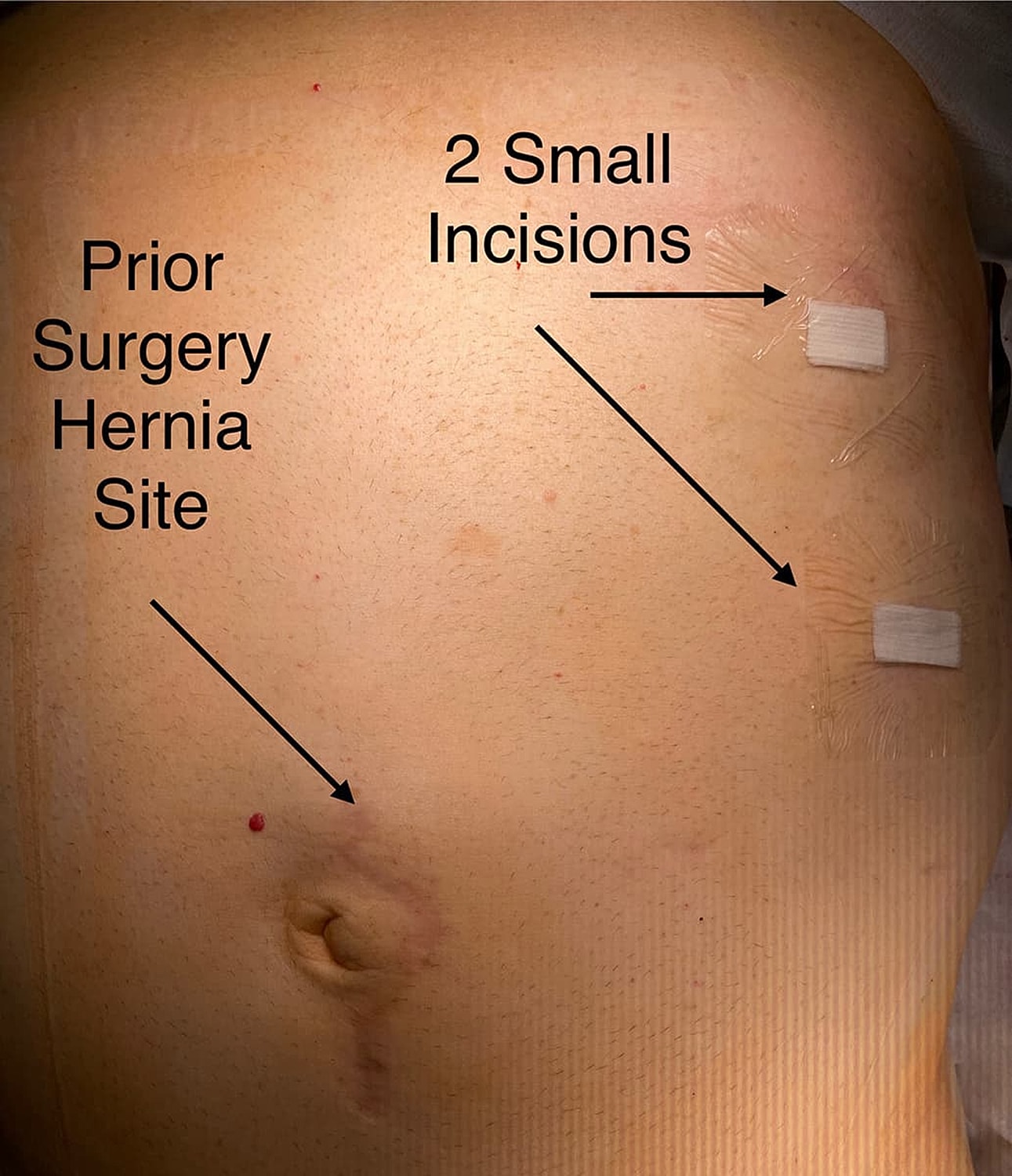
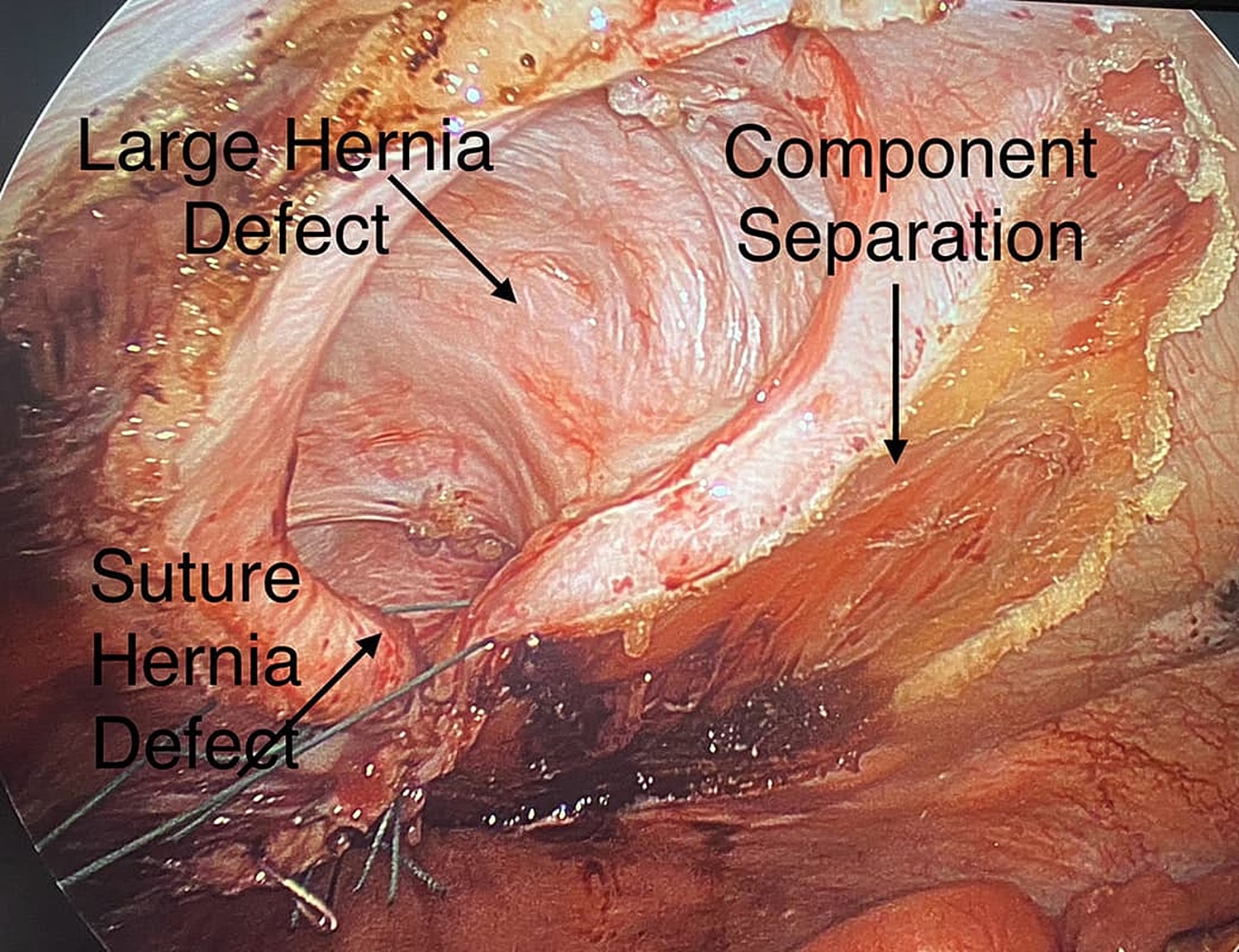
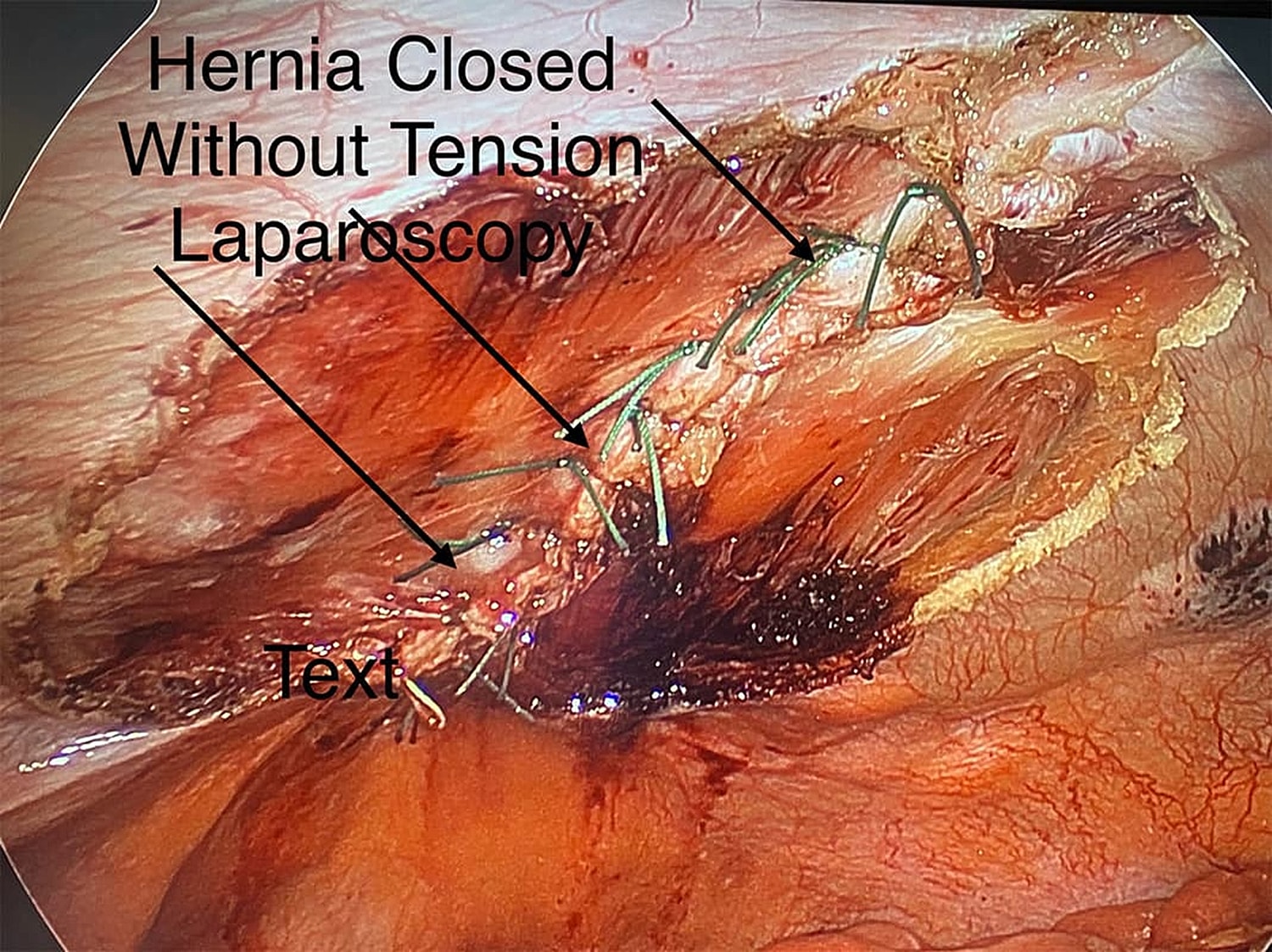
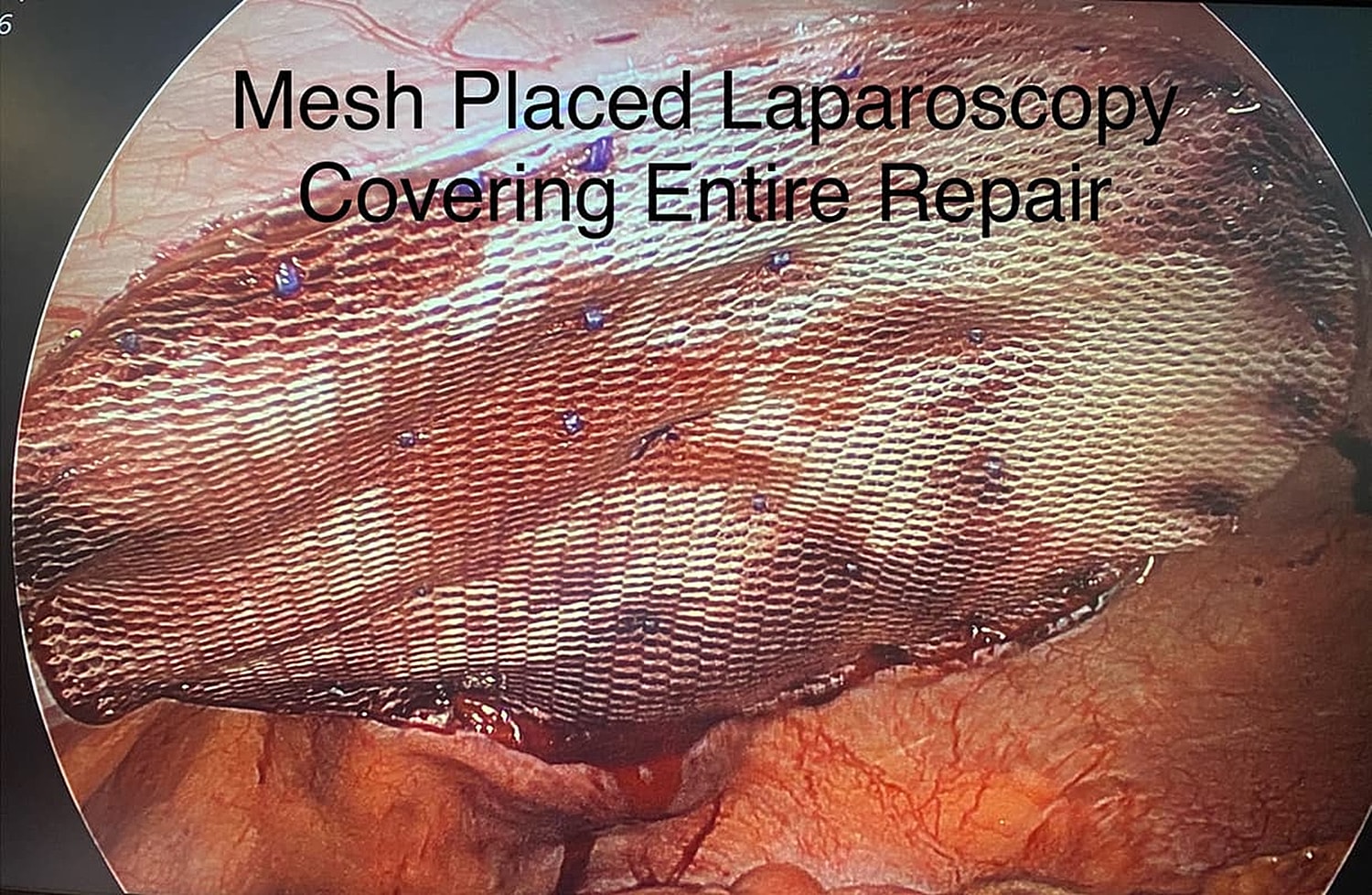
If both the “open” and “keyhole” techniques are equally viable in a particular case, laparoscopy has many advantages. The incisions are smaller and therefore less likely to become infected. Hospital stays and recovery times tend to be shorter.
If you have a hernia resulting from a previous surgery, you are likely a candidate for minimally invasive laparoscopic Incisional Hernia Repair in NYC. Confirm your candidacy and begin your treatment process by scheduling your consultation with Dr. Nakhjo.

When you wake up in a recovery room, your medical staff will monitor your temperature, pulse, blood pressure, and oxygen saturation. You may be getting oxygen through a thin tube that rests under your nose or from a mask that covers your nose and mouth. Most of our NYC Incisional Hernia Repair patients can return to desk jobs within a few days to a week.
Aftercare and Maintenance: Prevention of recurrence of an incisional hernia
You will be provided with detailed, specific recovery instructions. It is vitally important that you follow them diligently to ensure a full, safe, and lasting incisional hernia repair.
You don’t want to do this again. (Neither do we.)
The best way to regain your stamina is to do regular aerobic exercise, such as walking or stair climbing.
Avoid straining your abdominal muscles for a few months after your surgery. Don’t lift anything heavier than ten pounds for at least six weeks. During that same period, avoid all high-energy activities such as jogging, tennis, and any type of contact sports.
Incisional hernia repairs deliver ultimate relief. For the best possible outcome, discuss your minimally invasive treatment with Dr. Shomaf Nakhjo.

Dr. Nakhjo is board-certified and fellowship-trained in advanced, minimally invasive surgical procedures. His specialized training enables him to offer alternatives to open surgery, which can improve your recovery and reduce surgical scarring. Dr. Nakhjo has performed more than 4,000 surgical procedures and is a leading provider of advanced laparoscopic surgical care in Northern New York City. Book your consultation by registering online or calling (973) 381-9297.
Our "Ask the Dr. Anything" service is tailored to address any questions or uncertainties you may have regarding your hernia troubles. Whether you're seeking clarification on symptoms, treatment options, or our practice, we are here to provide you with comprehensive information and guidance.
Please feel free to email us at [email protected]. Under Subject type “ADA'' and Dr. Nakhjo will be happy to answer your questions. Let's navigate the complexities of your hernia troubles together, ensuring you have the support you need for a healthier tomorrow.
Since your surgery will be performed using general anesthesia, you will feel nothing during the procedure. You will have some post-surgical discomfort and soreness. Dr. Nakhjo will prescribe pain management medication as needed and appropriate.
All surgeries have some degree of risk, including bleeding, infection, intestinal injury, and blood clots. Risks are elevated for patients who are very overweight or have chronic medical conditions. Working with an experienced and board-certified provider is the best way to keep risks minimal.
While that decision may vary from case to case, Dr. Nakhjo has developed a procedure and technique that provides a secure and durable closure without the need for mesh reinforcement.
Not always. Some people can function normally and comfortably with a mild incisional hernia. However, the hernia cannot be repaired without surgery.
A hernia refers to the structural defect that is caused when an organ or fatty tissue protrudes through a weak spot in the abdominal wall.
An incisional hernia is a hernia that develops at or near the site of—and as a result of—a previous surgery. If the cut that was made in the original surgery does not grow back together tightly and securely enough, the abdominal wall may become weakened. If the incisional area can no longer withstand pressure, parts of organs or tissues may push through the breach, causing a bulge. Incisional hernias may develop months or years after an abdominal surgery.
In addition to being uncomfortable, irritating, unsightly, and inconvenient, incisional hernias can limit activity and impair breathing. In some cases, parts of your bowel can get trapped in the opening, cutting off blood supply and/or obstructing the passage of stool.
Incisional hernias can occur for a number of reasons, including:
While incisional hernias can happen at any time, they are statistically most likely to occur within 3-6 months following surgery. However, if the hernia appears within the first few weeks following abdominal surgery, the hernia should not be repaired immediately in order to give the abdominal wall time to recover.
While medical imaging may be used, incisional hernias can often be visually diagnosed by a lump or protrusion at or near the site of a previous incision. Your doctor may ask you to stand and cough, which tends to make a hernia more prominent.
Incisional hernias do not heal spontaneously. Surgical intervention is needed to repair a hernia. Two surgical techniques are available:
The choice between open and keyhole surgery may be based on a patient’s general health and individual anatomy, the size and location of the hernia, and the desired level of future physical activity.